










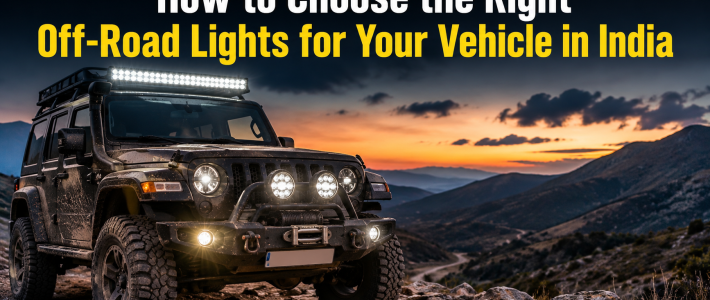
| How to choose off-road lights: Match the light type to your primary terrain. Combo-beam LED bars for highway and mixed-use. Wide flood lights for low-speed plantation trails. Selective yellow fog lamps for monsoon ghat fog. High-intensity spot lights for open mountain pass routes in Spiti and Ladakh. IP rating, beam pattern, and proper relay wiring matter more than the headline lumen figure on any product label |
Scenario: It's 9 PM on the Coorg plantation circuit. Your Thar's stock headlights illuminate roughly 40 metres ahead — enough for city speeds, but not for the unmarked sharp left materialising out of the fog. The overhanging coffee canopy has absorbed every photon of ambient light. The road is wet. This is exactly the situation that has pushed hundreds of Indian 4x4 owners toward serious off-road lighting upgrades. |
India's roads present a lighting challenge that no factory headlight was designed to solve. Fog on Western Ghat ghat roads, zero ambient light on Spiti Valley mountain passes at 4,500 metres, blinding dust on Rajasthan desert tracks, and rain-slicked plantation roads in Kerala where overhanging canopy kills visibility — these are not edge cases. They are the regular operating environment of India's growing off-road community.
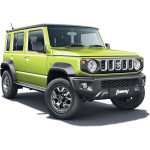
India's adventure vehicle culture has expanded sharply in recent years. The Mahindra Thar's 2020-generation relaunch, Toyota Hilux's India entry, the Maruti Jimny's return, and the sustained popularity of the Fortuner and Scorpio-N as overland platforms have created a new generation of drivers who use their vehicles far beyond tarmac. Each of these creates different off-road lighting requirements, mounting constraints, and compliance needs under Indian law.
This guide covers: the types of off-road lights available in India, the key factors that determine which setup works for your terrain and vehicle, the legal framework under Indian Motor Vehicles rules, vehicle-specific recommendations for the Thar, Hilux, Fortuner, and Jimny, and the common mistakes that turn a ₹15,000 lighting budget into a useless bracket on a bull bar.
What Are Off-Road Lights and Why Do You Need Them in India?
Off-road lights — also called auxiliary driving lights, supplemental lights, or adventure lights — are secondary lighting units mounted externally on a vehicle to extend visibility beyond what factory headlights provide. They are designed for higher brightness, wider beam spread, longer throw distance, or all three, to address specific terrain conditions where standard headlights are functionally inadequate.
Indian stock headlights are engineered to meet the minimum specifications prescribed under the Central Motor Vehicles Rules — designed for urban and highway compliance, not for 50 km/h mountain trail navigation with overhanging vegetation, or for highway fog that reduces visibility to 15 metres. Three structural gaps make factory lighting insufficient for serious Indian off-road use:
Beam throw distance: Stock headlights typically illuminate 80–120 metres on low beam. On a highway doing 80 km/h in fog, or on an unmarked mountain road at night, the stopping distance exceeds the visible distance — a fundamental safety gap.
Beam width: Narrow beam patterns designed for urban roads miss the peripheral zone where animals, unmarked corners, and trail obstacles appear on off-road terrain.
Weather penetration: Halogen and standard LED headlights scatter in heavy fog. Selective yellow auxiliary lights, specifically designed for fog penetration, outperform white headlights in the monsoon-season fog conditions common on India's ghat roads and northern plains.
For vehicles like the Toyota Hilux doing night runs on the Leh–Manali highway, or a Thar on the Munnar plantation circuit, off-road lights and accessories are not aesthetic upgrades — they are functional safety equipment.
Types of Off-Road Lights — Which One Is Right for You?
The led off road lights market covers six distinct categories, each with a different optical purpose. Buying the wrong type is the most common and most expensive mistake Indian buyers make — a 52" LED bar tuned for long-range spot output is useless on a 10 km/h technical plantation trail where you need width, not distance.
1. LED Light Bars — The Most Popular Choice for Indian Off-Roaders
Selecting the best LED light bar for off road use in India requires matching bar length, beam pattern, and build quality to your specific terrain — not buying on lumen rating alone. LED light bars dominate the Indian off road lights india market for good reason: a quality combo-beam bar provides both flood coverage (the wide, shorter-range beam that fills the immediate terrain) and spot coverage (the long-range pencil beam for distance) in a single housing. Sizes from 7" (compact Jimny-friendly) to 52" (Hilux roof rack full-width) are available in India through specialty retailers and online.
For a Toyota Hilux doing highway runs from Chandigarh to Leh, a 40–52 inch bar on the roof rack is the benchmark setup. For a Mahindra Thar doing ghat trail events, a 20–22" bar on the bull bar is more practical — roof bars catch branches on low canopy roads.
2. Spot, Flood, and Combo Beams — Understanding Beam Optics
Spot beams concentrate light into a tight forward column — maximum throw distance, minimum spread. Flood beams produce a wide, short-range arc — minimum throw, maximum spread. Combo beams combine both in a single housing using different lens arrays for different LED rows.
For Indian conditions, combo beam is the practical default. Pure spot setups are too narrow for technical trail navigation. Pure flood setups don't provide enough forward distance for highway speeds. Only at extremes — Spiti Valley open highway (pure spot optimal) or Plantation camp setup (pure flood optimal) — does a single-beam type outperform combo.
3. Pod and Cube Lights — Supplemental Peripheral Coverage
Pod lights — small square or round auxiliary units — are mounted at A-pillar positions, lower bumper corners, or below the main light bar to fill the peripheral zones that a central bar's optics miss. On Indian trails, the 'blind zone' directly beside the front bumper on tight corners is where most trail damage (rocks, stumps, ditch edges) occurs. Two pod lights set to flood beam at lower bumper corners address this specific problem. See Swastik Fabs' range of LED light bars for off-road vehicles for bar and pod bundle options.
Which Off-Road Light Is Best for Indian Roads?
For most Indian buyers — highway drivers and weekend off-roaders — a combo-beam LED light bar (18 inch –40 inch) mounted on a bull bar or roof rack, paired with two flood pod lights at A-pillar or lower bumper positions, is the most effective general-purpose setup available in India in 2026. This combination covers long-range forward visibility, short-range peripheral terrain, and performs across highway fog, ghat roads, plantation circuits, and light off-road terrain. |
Match Your Lights to Your Primary Use
Primary highway driving (NH, Leh–Manali, Rajasthan): 40–52 inch combo bar + 2 spot pods. Long-range forward visibility is the priority; narrow spot beam complements the bar's distance.
Ghat / plantation trails (Coorg, Munnar, Wayanad): 20–22" combo bar on bull bar + 2 wide flood pods at A-pillar or bumper corners. Width and short-range peripheral coverage matters more than distance.
Spiti / Ladakh overland: 40" bar + 4 pods (2 spot, 2 flood). Mountain pass sections need distance; camp and technical sections need width. Dual-mode setups justify premium investment here.
Urban auxiliary (Delhi NCR, Bangalore night commuting): Two AIS-088 compliant fog lamps. LED bars and spot lights on public urban roads create compliance and blinding risk — fog lamp category is the legally appropriate auxiliary for urban use.
Key Factors to Consider Before Buying Off-Road Lights in India
Seven factors determine whether a set of led off road lights performs correctly in Indian conditions or becomes an expensive disappointment. The table below cross-references each factor against India-specific importance — because what matters in Norway's clear air is not what matters in a Rajasthan dust storm or a Kerala monsoon.
IP Rating — The Most Underread Specification in India
IP ratings follow the IEC 60529 international standard, which is referenced in Indian standards aligned by the Bureau of Indian Standards (BIS). The two digits indicate particle and liquid resistance respectively: IP67 = fully dustproof (6) + immersion to 1 metre for 30 minutes (7). IP68 = dustproof + continuous immersion depth as per manufacturer specification. IP69K = dustproof + high-pressure/high-temperature jet wash resistance.
For India, IP67 is the minimum. Vehicles that ford streams on Coorg trails, drive through standing water on flooded rural roads, or get jet-washed after a mud run need IP68 or IP69K. A light rated IP65 (splash resistant) will fail within one monsoon season in a vehicle that does real off-road use.
Power Draw — The Electrical Mistake Indian Buyers Miss
Every auxiliary light draws current from the vehicle's electrical system. A 52" LED bar drawing 200W at 12V pulls approximately 16.7 amps — more than most factory auxiliary switch circuits are fused for. Wiring auxiliary lights directly through the factory fog lamp switch circuit overloads the factory wiring, creates fire risk, and typically voids the vehicle warranty.
The correct installation uses a dedicated relay harness: power flows directly from the battery through a relay, fused appropriately for total wattage. The factory switch only triggers the relay (low-current signal), not the load. This is non-negotiable for any setup over 60W total. See wiring harness and relay kits for relay harness options compatible with Indian vehicles.
Are Off-Road Lights Legal in India? Rules, Compliance and Reality
This is the question most Indian buyers ask after purchase, not before — which is the wrong sequence. The legal framework for auxiliary vehicle lighting in India sits across three sources:
Central Motor Vehicles Rules (CMVR) 1989: The primary regulation governing vehicle equipment on public roads in India, made under the Motor Vehicles Act 1988. The CMVR's lighting and electrical equipment provisions govern the specifications, placement, and use of all lights on registered vehicles. Current consolidated CMVR text is available through the MoRTH portal.
AIS-088 — Automotive Industry Standard: The type approval standard for front fog lamps on motor vehicles in India, issued by ARAI (Automotive Research Association of India). Fog lamps sold for on-road use in India require AIS-088 type approval.
Motor Vehicles Act 1988 (as amended 2019): Section 121 and related provisions govern light usage during vehicle movement; the 2019 amendment strengthened enforcement provisions. Verify current rules at MoRTH.
What Is Permitted — and What Will Get You Flagged
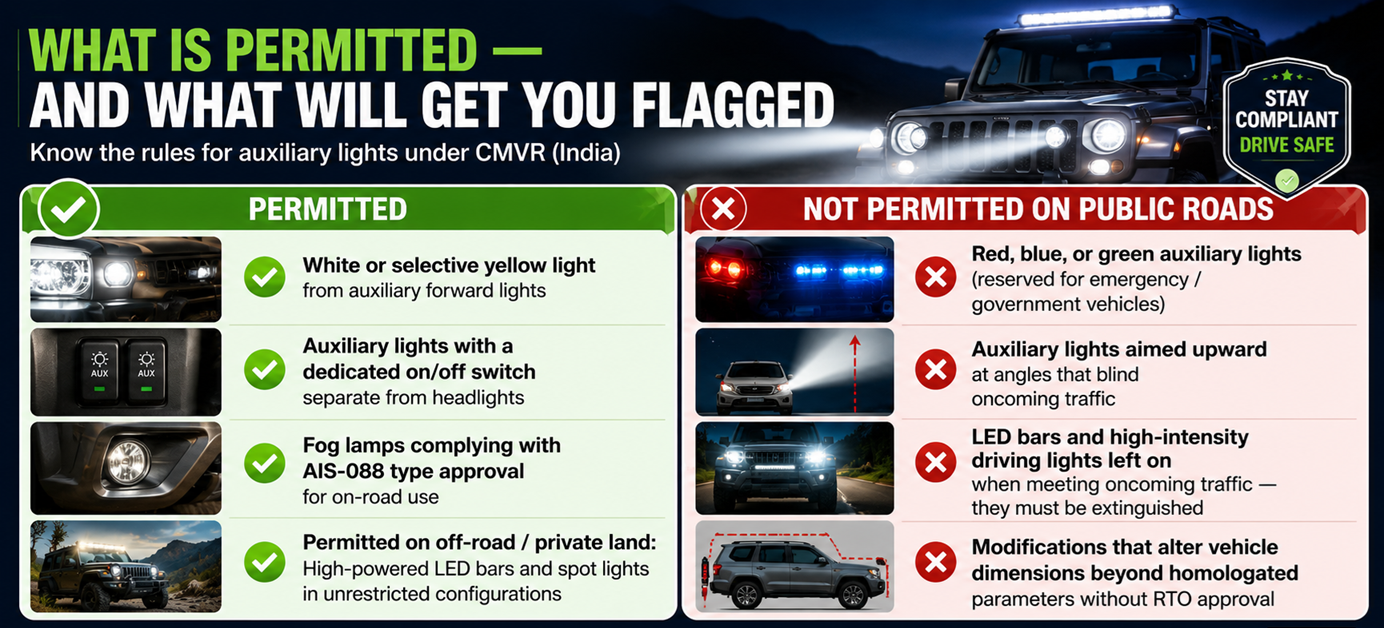
The following represents general guidance based on publicly available CMVR provisions; consult the official MoRTH portal or a qualified automotive compliance professional for current binding regulation:
Permitted: White or selective yellow light from auxiliary forward lights
Permitted: Auxiliary lights with a dedicated on/off switch separate from headlights
Permitted: Fog lamps complying with AIS-088 type approval for on-road use
Permitted on off-road/private land: High-powered LED bars and spot lights in unrestricted configurations
Not permitted on public roads: Red, blue, or green auxiliary lights (reserved for emergency/government vehicles)
Not permitted on public roads: Auxiliary lights aimed upward at angles that blind oncoming traffic
Not permitted on public roads: LED bars and high-intensity driving lights left on when meeting oncoming traffic — they must be extinguished
Not permitted: Modifications that alter vehicle dimensions beyond homologated parameters without RTO approval
| Enforcement of auxiliary light regulations under the Motor Vehicles Act is the jurisdiction of state traffic police and RTOs. Enforcement priority, penalty amounts, and checkpoint frequency vary across states and are determined by local administration — not available as a uniform national dataset. Regardless of local enforcement patterns, non-compliant lighting creates personal liability under the Motor Vehicles Act in the event of an accident. Compliant, properly aimed setups reduce that liability while delivering the safety benefit the lights were purchased to provide. |
Best Off-Road Light Setup Based on Your Vehicle
The 'best' setup is defined by the vehicle's mounting options, primary terrain, and user's experience level. The table below maps India's most popular lights for off road vehicles setups against each platform, with mounting position and use-case context.
Toyota Hilux — Off-Road Lighting for India's Premium Trail Vehicle
The Toyota Hilux is India's most capable factory-equipped truck for overlanding. Its elevated roof rack position, robust bull bar mounting, and high alternator output make it the ideal platform for serious off road lights for toyota hilux india setups. A 40–52" LED bar on the roof rack gives maximum elevation advantage — the beam clears the bonnet, reduces shadow behind terrain features, and illuminates across a full trail width. Pair it with four cube pods: two spot-beam at the bull bar (distance) and two flood-beam at lower bumper corners (peripheral close-range coverage).
For Hilux owners doing the Spiti Circuit — arguably India's most demanding night driving route — add a rear flood bar on the rear bumper for reversing on mountain edges and camp area illumination. See Toyota Hilux off-road accessories India for Hilux-specific mounting compatibility.
Mahindra Thar — The Most Common Platform in Indian Trail Events
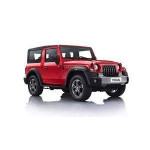
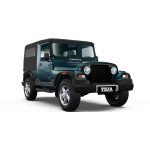
The 2020-generation Thar brought genuine off-road capability to a mass market. Its low roofline and available A-pillar pods, combined with a strong accessory ecosystem, make the Mahindra Thar accessories and lighting market the most developed in India. A 20–22" combo bar on the bull bar is the benchmark Thar setup — fitting the narrower track width and avoiding the branch-strike risk that a full-width roof bar creates on Coorg and Munnar plantation trails where canopy is low.
On the tight plantation and ghat trail networks of Coorg, Munnar, and Wayanad, A-pillar-mounted flood pods — aimed at the road shoulder rather than forward — address the specific navigation challenge that central bars cannot: the side drop-offs, bank edges, and road boundaries that fall outside the central beam's coverage zone but appear in the first two metres beside the vehicle at every corner.
Toyota Fortuner — Highway-Focused Overland Setup
The Fortuner is primarily a highway-speed overland vehicle in India — used for long-distance family overlanding to Rajasthan, Rann of Kutch, and Corbett rather than technical trail events. Two premium spot lights (Hella Rallye or KC HiLites equivalent) on lower bumper brackets provide the long-range forward visibility that makes the ₹15,000–₹25,000 investment worthwhile on dark NHs. See Toyota Fortuner accessories and lighting for bumper-compatible mounting brackets.
Installation, Budget and Common Mistakes to Avoid
How to Mount Off-Road Lights — The Correct Process
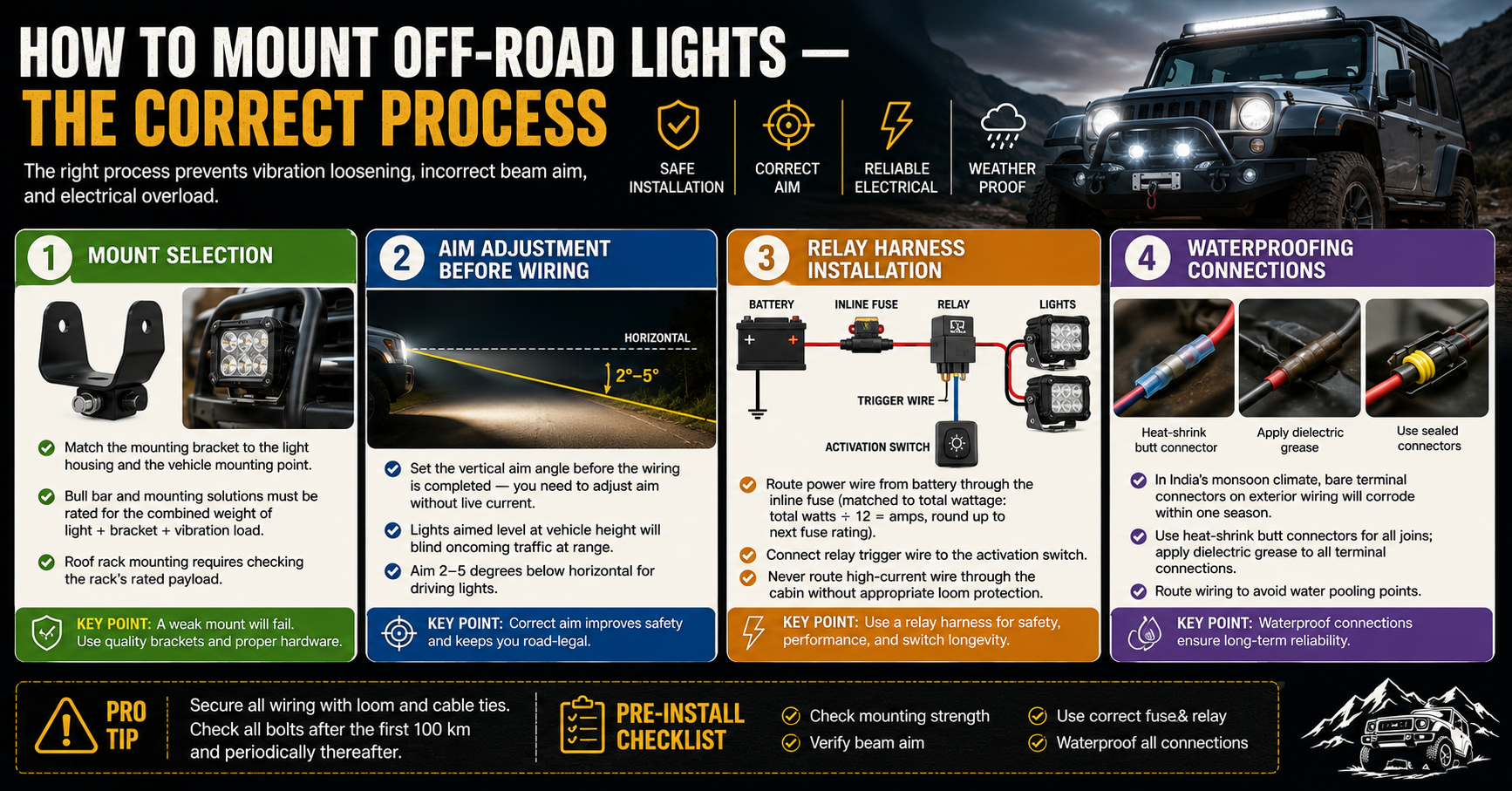
Understanding how to mount off-road lights correctly prevents the three most common failures: vibration loosening, incorrect beam aim, and electrical overload. The mounting process has four sequential steps:
Step 1 — Mount selection: Match the mounting bracket to the light housing and the vehicle mounting point. Bull bar and mounting solutions must be rated for the combined weight of light + bracket + vibration load. Roof rack mounting requires checking the rack's rated payload.
Step 2 — Aim adjustment before wiring: Set the vertical aim angle before the wiring is completed — you need to adjust aim without live current. Lights aimed level at vehicle height will blind oncoming traffic at range; aim 2–5 degrees below horizontal for driving lights.
Step 3 — Relay harness installation: Route power wire from battery through the inline fuse (matched to total wattage: total watts ÷ 12 = amps, round up to next fuse rating). Connect relay trigger wire to the activation switch. Never route high-current wire through the cabin without appropriate loom protection.
Step 4 — Waterproofing connections: In India's monsoon climate, bare terminal connectors on exterior wiring will corrode within one season. Use heat-shrink butt connectors for all joins; apply dielectric grease to all terminal connections; route wiring to avoid water pooling points.
Budget Guidance for Indian Buyers
| Budget vs Premium Decision: Below ₹5,000, lumen ratings on budget products are routinely overstated — a product claiming 60,000 lumens at ₹1,500 cannot physically produce that output given the LED array and optics fitted. For casual weekend use on known trails, budget brands are acceptable. For serious off-road use, monsoon driving, or highway night runs above 80 km/h, the failure points are wiring quality, heat dissipation, and IP rating — not the LEDs themselves. Mid-range Indian pricing (₹8,000–₹25,000) for a verified combo setup consistently outperforms ₹40,000+ setups with poorly matched optics for mixed Indian terrain. Always request the product's actual IP rating certificate and beam pattern data sheet before purchase. |
5 Common Mistakes Indian Off-Road Light Buyers Make
Direct battery wiring without a relay: Causes alternator stress, factory switch burnout, and fire risk under sustained load.
Buying on lumen claims alone: 50,000-lumen claims on ₹2,000 products are marketing — check IP rating, optics quality, and warranty terms instead.
Spot-only setup on technical trails: A narrow spot beam aimed straight ahead is useless at 5 km/h navigating a rocky trail — you need width, not distance.
Mounting too low on bumper without droop clearance: At full droop articulation, a low-mounted light faces the sky or the wheel arch — test aim at both compression and droop before final mounting.
No beam aim check after installation: Lights aimed too high on public roads attract RTO attention; lights aimed too low waste 40% of throw distance.
Top Off-Road Light Brands Available in India
The following brand overview is educational — not a promotion. All prices are indicative market estimates as of 2026 and subject to change; verify current pricing with Indian distributors before purchase. No ranking or recommendation of a specific brand product is implied — the table maps each brand's India availability and positioning to help buyers match a brand tier to their requirement and budget.
Two specific notes for Indian buyers: First, many Chinese-origin products sold on Amazon India and Flipkart do not carry AIS-088 type approval — they are suitable for off-road use but may not comply with on-road auxiliary lamp regulations. Second, brands with no Indian service network (no distributor, no warranty service centre) offer no recourse beyond return-window replacement, which typically requires shipping to a Chinese address. For premium builds, choose brands with verifiable Indian distribution.
Real-World Off-Road Lighting Setups for Indian Terrain
1. Coorg / Wayanad Plantation Roads — Width Over Distance
Plantation roads in Karnataka and Kerala typically run under 4–6 metre canopy with zero ambient light after 7 PM, single-track width, no barrier separating road from coffee/tea estate slopes, and wet grip on leaf-mulch surface in monsoon season. The lighting priority is peripheral width, not forward distance. A 20" combo bar at bull bar height + two A-pillar flood pods produces a wide, even cone that fills the road shoulder and catches unmarked water channels and slope edges. High-mounted roof bars on Coorg trails are prone to branch strike — keep light mounting below roofline on plantation circuits.
2. Spiti Valley / Ladakh — Distance and Altitude Performance
Spiti and Ladakh present the opposite requirement: long stretches of open mountain road with no road lighting, near-zero humidity, extreme cold (−20°C in winter passes), and sudden changes from open plateau to narrow ledge road. Here, long-range spot output matters — seeing 600–800 metres ahead at highway speed on the Manali-Leh highway gives reaction time for the unexpected obstacles (landslide debris, stray animals, unlit slow vehicles) that characterise this route. A quality 52" bar with true spot rows + 2 premium spot lights gives the 600m+ illuminated distance that experienced Spiti overlanders use as a benchmark.
Cold-temperature performance: verify the operating temperature range on the manufacturer's official product data sheet before purchasing any light for Ladakh use. Premium brands typically publish minimum operating temperature specifications; budget products rarely do. Adhesive seals and low-grade wiring insulation in non-specified units can fail at sustained sub-zero temperatures — a failure mode that creates safety risk at exactly the moment visibility matters most.
3. Rann of Kutch / Desert — Dust, Heat, and Flat Visibility
The Rann presents a specific challenge: fine white salt dust at the White Rann creates a scattering medium that a raw spot beam penetrates poorly — the same physics as fog. A combo beam or selective yellow auxiliary flood performs better than a high-intensity spot in this environment. IP69K is recommended for vehicles doing prolonged Rann drives, where salt-saturated dust spray penetrates non-sealed housings rapidly. Heat resistance matters in summer months — verify maximum ambient operating temperature specifications for any setup used between March and June in Kutch.
4. Western Ghats Ghat Roads — Fog Penetration and Corner Illumination
India's most demanding on-road off-road driving context: ghat roads from sea level to 1,800+ metres, where fog descends without warning, hairpin bends have no guardrails, and oncoming traffic is invisible in the headlight scatter. Selective yellow fog lights — AIS-088 compliant — cut through moisture fog better than white spot beams. The beam angle is as important as the output: fog lamps aimed low and wide, not forward, keep light below the fog layer and illuminate the road surface rather than the fog itself. A Toyota Hilux or Fortuner driver on the Wayanad Ghat with correctly aimed yellow fog lamps has genuinely better wet-night visibility than one running a high-output white LED bar aimed horizontally.
Conclusion — Choosing the Right Off-Road Lights the Smart Way
The single principle that separates a useful off-road lighting setup from an expensive mistake: match the light type to the terrain, not to the price point or the lumen claim. A ₹6,000 combo bar with honest IP67 rating, correct beam geometry, and proper relay wiring will outperform a ₹40,000 mismatched setup on Indian trails every time.
Start with your primary terrain. Plantation trail? Prioritise width. Spiti highway? Prioritise distance. Monsoon ghats? AIS-088 yellow fog is the answer no LED bar can replace. Match your light type to that answer first. Then select the brand tier your budget allows. Then install correctly — relay harness, waterproofed connections, proper aim.
India's off-road culture deserves off-road lighting built for India's conditions — not repurposed products from other markets with inflated lumen claims and no service network. The difference is visible on the first night trail you run with the right setup.
▶ Build Your Off-Road Lighting Setup with Swastik Fabs Swastik Fabs builds vehicle-specific off-road light setups for the Thar, Hilux, Fortuner, Jimny, and other Indian 4x4 platforms — covering LED light bars, pod lights, wiring harness kits, and bull bar and mounting solutions. For a vehicle-specific recommendation based on your terrain and vehicle: swastikfabs.in/contact |
Frequently Asked Questions About Off-Road Lights
Q1. What type of off-road lights are best for Indian conditions?
For most Indian terrain — highway fog, ghat roads, and plantation trails — a combo beam LED light bar (18 inch– 40 inch) paired with two flood pod lights is the most versatile setup. The combo bar covers long-range visibility; the flood pods fill the short-range peripheral zone critical on hairpin bends and plantation tracks. For vehicles like the Toyota Hilux and Fortuner, spot lights mounted higher on a roof rack add long-range capability for open terrain such as Spiti and Ladakh.
Q2. Are auxiliary off-road lights legal to use in India?
Auxiliary and driving lights fitted to motor vehicles in India must comply with the Central Motor Vehicles Rules (CMVR) under the Motor Vehicles Act, and must emit white or selective yellow light only. For fog lamps, AIS-088 type approval (issued by ARAI) is the applicable standard. On public roads, auxiliary driving lights must be switched off when meeting oncoming traffic. Using non-compliant, red, blue, or excessively bright auxiliary lights on public roads can attract penalties under the Motor Vehicles Act. Always verify the product's type approval documentation and consult the official MoRTH portal at morth.nic.in for current regulations.
Q3. What IP rating should off-road lights have for Indian monsoons?
IP67 is the minimum acceptable rating for off-road lights used in India, providing dustproof protection and water immersion resistance up to 1 metre for 30 minutes. For states with heavy monsoon exposure — Kerala, Karnataka coast, Northeast India — IP68 (manufacturer-specified continuous submersion) is preferred. IP69K (high-pressure water jet resistance, per IEC 60529 standard) is optimal for vehicles that are washed with jet washers. The IP rating standard is defined in IEC 60529, referenced in Indian standards through BIS.
Q4. How many lumens do I need for off-road night driving in India?
There is no official government-mandated minimum lumen requirement for auxiliary off-road lights in India. As practical guidance, a setup generating 8,000–15,000 effective lumens forward is suitable for highway and moderate trail driving. For mountain passes (Spiti, Ladakh, Rohtang) where visibility is critical at high speed on narrow roads, setups in the 20,000–40,000 effective lumen range are commonly used by experienced overlanders. Note that raw lumen ratings on budget products are often inflated — assess beam throw distance and optics quality rather than headline lumen figures alone.
Q5. What is the difference between a light bar and spot lights for off-roading?
An LED light bar is a single elongated housing containing multiple LED elements across its length, producing a wide illuminated field — most are combo beam (flood + spot combined). Spot lights are compact, focused single units that throw a pencil-narrow beam to extreme distance (400–1,000 m+) but illuminate a narrow arc. For Indian off-road use, light bars give the best general-purpose illumination across most terrain types. Spot lights are the better choice for open high-altitude roads (Ladakh, Spiti) where seeing far ahead on straight sections matters more than peripheral width.
| How to choose off-road lights: Match the light type to your primary terrain. Combo-beam LED bars for highway and mixed-use. Wide flood lights for low-speed plantation trails. Selective yellow fog lamps for monsoon ghat fog. High-intensity spot lights for open mountain pass routes in Spiti and Ladakh. IP rating, beam pattern, and proper relay wiring matter more than the headline lumen figure on any product label |
Scenario: It's 9 PM on the Coorg plantation circuit. Your Thar's stock headlights illuminate roughly 40 metres ahead — enough for city speeds, but not for the unmarked sharp left materialising out of the fog. The overhanging coffee canopy has absorbed every photon of ambient light. The road is wet. This is exactly the situation that has pushed hundreds of Indian 4x4 owners toward serious off-road lighting upgrades. |
India's roads present a lighting challenge that no factory headlight was designed to solve. Fog on Western Ghat ghat roads, zero ambient light on Spiti Valley mountain passes at 4,500 metres, blinding dust on Rajasthan desert tracks, and rain-slicked plantation roads in Kerala where overhanging canopy kills visibility — these are not edge cases. They are the regular operating environment of India's growing off-road community.
India's adventure vehicle culture has expanded sharply in recent years. The Mahindra Thar's 2020-generation relaunch, Toyota Hilux's India entry, the Maruti Jimny's return, and the sustained popularity of the Fortuner and Scorpio-N as overland platforms have created a new generation of drivers who use their vehicles far beyond tarmac. Each of these creates different off-road lighting requirements, mounting constraints, and compliance needs under Indian law.
This guide covers: the types of off-road lights available in India, the key factors that determine which setup works for your terrain and vehicle, the legal framework under Indian Motor Vehicles rules, vehicle-specific recommendations for the Thar, Hilux, Fortuner, and Jimny, and the common mistakes that turn a ₹15,000 lighting budget into a useless bracket on a bull bar.
What Are Off-Road Lights and Why Do You Need Them in India?
Off-road lights — also called auxiliary driving lights, supplemental lights, or adventure lights — are secondary lighting units mounted externally on a vehicle to extend visibility beyond what factory headlights provide. They are designed for higher brightness, wider beam spread, longer throw distance, or all three, to address specific terrain conditions where standard headlights are functionally inadequate.
Indian stock headlights are engineered to meet the minimum specifications prescribed under the Central Motor Vehicles Rules — designed for urban and highway compliance, not for 50 km/h mountain trail navigation with overhanging vegetation, or for highway fog that reduces visibility to 15 metres. Three structural gaps make factory lighting insufficient for serious Indian off-road use:
Beam throw distance: Stock headlights typically illuminate 80–120 metres on low beam. On a highway doing 80 km/h in fog, or on an unmarked mountain road at night, the stopping distance exceeds the visible distance — a fundamental safety gap.
Beam width: Narrow beam patterns designed for urban roads miss the peripheral zone where animals, unmarked corners, and trail obstacles appear on off-road terrain.
Weather penetration: Halogen and standard LED headlights scatter in heavy fog. Selective yellow auxiliary lights, specifically designed for fog penetration, outperform white headlights in the monsoon-season fog conditions common on India's ghat roads and northern plains.
For vehicles like the Toyota Hilux doing night runs on the Leh–Manali highway, or a Thar on the Munnar plantation circuit, off-road lights and accessories are not aesthetic upgrades — they are functional safety equipment.
Types of Off-Road Lights — Which One Is Right for You?
The led off road lights market covers six distinct categories, each with a different optical purpose. Buying the wrong type is the most common and most expensive mistake Indian buyers make — a 52" LED bar tuned for long-range spot output is useless on a 10 km/h technical plantation trail where you need width, not distance.
1. LED Light Bars — The Most Popular Choice for Indian Off-Roaders
Selecting the best LED light bar for off road use in India requires matching bar length, beam pattern, and build quality to your specific terrain — not buying on lumen rating alone. LED light bars dominate the Indian off road lights india market for good reason: a quality combo-beam bar provides both flood coverage (the wide, shorter-range beam that fills the immediate terrain) and spot coverage (the long-range pencil beam for distance) in a single housing. Sizes from 7" (compact Jimny-friendly) to 52" (Hilux roof rack full-width) are available in India through specialty retailers and online.
For a Toyota Hilux doing highway runs from Chandigarh to Leh, a 40–52 inch bar on the roof rack is the benchmark setup. For a Mahindra Thar doing ghat trail events, a 20–22" bar on the bull bar is more practical — roof bars catch branches on low canopy roads.
2. Spot, Flood, and Combo Beams — Understanding Beam Optics
Spot beams concentrate light into a tight forward column — maximum throw distance, minimum spread. Flood beams produce a wide, short-range arc — minimum throw, maximum spread. Combo beams combine both in a single housing using different lens arrays for different LED rows.
For Indian conditions, combo beam is the practical default. Pure spot setups are too narrow for technical trail navigation. Pure flood setups don't provide enough forward distance for highway speeds. Only at extremes — Spiti Valley open highway (pure spot optimal) or Plantation camp setup (pure flood optimal) — does a single-beam type outperform combo.
3. Pod and Cube Lights — Supplemental Peripheral Coverage
Pod lights — small square or round auxiliary units — are mounted at A-pillar positions, lower bumper corners, or below the main light bar to fill the peripheral zones that a central bar's optics miss. On Indian trails, the 'blind zone' directly beside the front bumper on tight corners is where most trail damage (rocks, stumps, ditch edges) occurs. Two pod lights set to flood beam at lower bumper corners address this specific problem. See Swastik Fabs' range of LED light bars for off-road vehicles for bar and pod bundle options.
Which Off-Road Light Is Best for Indian Roads?
For most Indian buyers — highway drivers and weekend off-roaders — a combo-beam LED light bar (18 inch –40 inch) mounted on a bull bar or roof rack, paired with two flood pod lights at A-pillar or lower bumper positions, is the most effective general-purpose setup available in India in 2026. This combination covers long-range forward visibility, short-range peripheral terrain, and performs across highway fog, ghat roads, plantation circuits, and light off-road terrain. |
Match Your Lights to Your Primary Use
Primary highway driving (NH, Leh–Manali, Rajasthan): 40–52 inch combo bar + 2 spot pods. Long-range forward visibility is the priority; narrow spot beam complements the bar's distance.
Ghat / plantation trails (Coorg, Munnar, Wayanad): 20–22" combo bar on bull bar + 2 wide flood pods at A-pillar or bumper corners. Width and short-range peripheral coverage matters more than distance.
Spiti / Ladakh overland: 40" bar + 4 pods (2 spot, 2 flood). Mountain pass sections need distance; camp and technical sections need width. Dual-mode setups justify premium investment here.
Urban auxiliary (Delhi NCR, Bangalore night commuting): Two AIS-088 compliant fog lamps. LED bars and spot lights on public urban roads create compliance and blinding risk — fog lamp category is the legally appropriate auxiliary for urban use.
Key Factors to Consider Before Buying Off-Road Lights in India
Seven factors determine whether a set of led off road lights performs correctly in Indian conditions or becomes an expensive disappointment. The table below cross-references each factor against India-specific importance — because what matters in Norway's clear air is not what matters in a Rajasthan dust storm or a Kerala monsoon.
IP Rating — The Most Underread Specification in India
IP ratings follow the IEC 60529 international standard, which is referenced in Indian standards aligned by the Bureau of Indian Standards (BIS). The two digits indicate particle and liquid resistance respectively: IP67 = fully dustproof (6) + immersion to 1 metre for 30 minutes (7). IP68 = dustproof + continuous immersion depth as per manufacturer specification. IP69K = dustproof + high-pressure/high-temperature jet wash resistance.
For India, IP67 is the minimum. Vehicles that ford streams on Coorg trails, drive through standing water on flooded rural roads, or get jet-washed after a mud run need IP68 or IP69K. A light rated IP65 (splash resistant) will fail within one monsoon season in a vehicle that does real off-road use.
Power Draw — The Electrical Mistake Indian Buyers Miss
Every auxiliary light draws current from the vehicle's electrical system. A 52" LED bar drawing 200W at 12V pulls approximately 16.7 amps — more than most factory auxiliary switch circuits are fused for. Wiring auxiliary lights directly through the factory fog lamp switch circuit overloads the factory wiring, creates fire risk, and typically voids the vehicle warranty.
The correct installation uses a dedicated relay harness: power flows directly from the battery through a relay, fused appropriately for total wattage. The factory switch only triggers the relay (low-current signal), not the load. This is non-negotiable for any setup over 60W total. See wiring harness and relay kits for relay harness options compatible with Indian vehicles.
Are Off-Road Lights Legal in India? Rules, Compliance and Reality
This is the question most Indian buyers ask after purchase, not before — which is the wrong sequence. The legal framework for auxiliary vehicle lighting in India sits across three sources:
Central Motor Vehicles Rules (CMVR) 1989: The primary regulation governing vehicle equipment on public roads in India, made under the Motor Vehicles Act 1988. The CMVR's lighting and electrical equipment provisions govern the specifications, placement, and use of all lights on registered vehicles. Current consolidated CMVR text is available through the MoRTH portal.
AIS-088 — Automotive Industry Standard: The type approval standard for front fog lamps on motor vehicles in India, issued by ARAI (Automotive Research Association of India). Fog lamps sold for on-road use in India require AIS-088 type approval.
Motor Vehicles Act 1988 (as amended 2019): Section 121 and related provisions govern light usage during vehicle movement; the 2019 amendment strengthened enforcement provisions. Verify current rules at MoRTH.
What Is Permitted — and What Will Get You Flagged
The following represents general guidance based on publicly available CMVR provisions; consult the official MoRTH portal or a qualified automotive compliance professional for current binding regulation:
Permitted: White or selective yellow light from auxiliary forward lights
Permitted: Auxiliary lights with a dedicated on/off switch separate from headlights
Permitted: Fog lamps complying with AIS-088 type approval for on-road use
Permitted on off-road/private land: High-powered LED bars and spot lights in unrestricted configurations
Not permitted on public roads: Red, blue, or green auxiliary lights (reserved for emergency/government vehicles)
Not permitted on public roads: Auxiliary lights aimed upward at angles that blind oncoming traffic
Not permitted on public roads: LED bars and high-intensity driving lights left on when meeting oncoming traffic — they must be extinguished
Not permitted: Modifications that alter vehicle dimensions beyond homologated parameters without RTO approval
| Enforcement of auxiliary light regulations under the Motor Vehicles Act is the jurisdiction of state traffic police and RTOs. Enforcement priority, penalty amounts, and checkpoint frequency vary across states and are determined by local administration — not available as a uniform national dataset. Regardless of local enforcement patterns, non-compliant lighting creates personal liability under the Motor Vehicles Act in the event of an accident. Compliant, properly aimed setups reduce that liability while delivering the safety benefit the lights were purchased to provide. |
Best Off-Road Light Setup Based on Your Vehicle
The 'best' setup is defined by the vehicle's mounting options, primary terrain, and user's experience level. The table below maps India's most popular lights for off road vehicles setups against each platform, with mounting position and use-case context.
Toyota Hilux — Off-Road Lighting for India's Premium Trail Vehicle
The Toyota Hilux is India's most capable factory-equipped truck for overlanding. Its elevated roof rack position, robust bull bar mounting, and high alternator output make it the ideal platform for serious off road lights for toyota hilux india setups. A 40–52" LED bar on the roof rack gives maximum elevation advantage — the beam clears the bonnet, reduces shadow behind terrain features, and illuminates across a full trail width. Pair it with four cube pods: two spot-beam at the bull bar (distance) and two flood-beam at lower bumper corners (peripheral close-range coverage).
For Hilux owners doing the Spiti Circuit — arguably India's most demanding night driving route — add a rear flood bar on the rear bumper for reversing on mountain edges and camp area illumination. See Toyota Hilux off-road accessories India for Hilux-specific mounting compatibility.
Mahindra Thar — The Most Common Platform in Indian Trail Events
The 2020-generation Thar brought genuine off-road capability to a mass market. Its low roofline and available A-pillar pods, combined with a strong accessory ecosystem, make the Mahindra Thar accessories and lighting market the most developed in India. A 20–22" combo bar on the bull bar is the benchmark Thar setup — fitting the narrower track width and avoiding the branch-strike risk that a full-width roof bar creates on Coorg and Munnar plantation trails where canopy is low.
On the tight plantation and ghat trail networks of Coorg, Munnar, and Wayanad, A-pillar-mounted flood pods — aimed at the road shoulder rather than forward — address the specific navigation challenge that central bars cannot: the side drop-offs, bank edges, and road boundaries that fall outside the central beam's coverage zone but appear in the first two metres beside the vehicle at every corner.
Toyota Fortuner — Highway-Focused Overland Setup
The Fortuner is primarily a highway-speed overland vehicle in India — used for long-distance family overlanding to Rajasthan, Rann of Kutch, and Corbett rather than technical trail events. Two premium spot lights (Hella Rallye or KC HiLites equivalent) on lower bumper brackets provide the long-range forward visibility that makes the ₹15,000–₹25,000 investment worthwhile on dark NHs. See Toyota Fortuner accessories and lighting for bumper-compatible mounting brackets.
Installation, Budget and Common Mistakes to Avoid
How to Mount Off-Road Lights — The Correct Process
Understanding how to mount off-road lights correctly prevents the three most common failures: vibration loosening, incorrect beam aim, and electrical overload. The mounting process has four sequential steps:
Step 1 — Mount selection: Match the mounting bracket to the light housing and the vehicle mounting point. Bull bar and mounting solutions must be rated for the combined weight of light + bracket + vibration load. Roof rack mounting requires checking the rack's rated payload.
Step 2 — Aim adjustment before wiring: Set the vertical aim angle before the wiring is completed — you need to adjust aim without live current. Lights aimed level at vehicle height will blind oncoming traffic at range; aim 2–5 degrees below horizontal for driving lights.
Step 3 — Relay harness installation: Route power wire from battery through the inline fuse (matched to total wattage: total watts ÷ 12 = amps, round up to next fuse rating). Connect relay trigger wire to the activation switch. Never route high-current wire through the cabin without appropriate loom protection.
Step 4 — Waterproofing connections: In India's monsoon climate, bare terminal connectors on exterior wiring will corrode within one season. Use heat-shrink butt connectors for all joins; apply dielectric grease to all terminal connections; route wiring to avoid water pooling points.
Budget Guidance for Indian Buyers
| Budget vs Premium Decision: Below ₹5,000, lumen ratings on budget products are routinely overstated — a product claiming 60,000 lumens at ₹1,500 cannot physically produce that output given the LED array and optics fitted. For casual weekend use on known trails, budget brands are acceptable. For serious off-road use, monsoon driving, or highway night runs above 80 km/h, the failure points are wiring quality, heat dissipation, and IP rating — not the LEDs themselves. Mid-range Indian pricing (₹8,000–₹25,000) for a verified combo setup consistently outperforms ₹40,000+ setups with poorly matched optics for mixed Indian terrain. Always request the product's actual IP rating certificate and beam pattern data sheet before purchase. |
5 Common Mistakes Indian Off-Road Light Buyers Make
Direct battery wiring without a relay: Causes alternator stress, factory switch burnout, and fire risk under sustained load.
Buying on lumen claims alone: 50,000-lumen claims on ₹2,000 products are marketing — check IP rating, optics quality, and warranty terms instead.
Spot-only setup on technical trails: A narrow spot beam aimed straight ahead is useless at 5 km/h navigating a rocky trail — you need width, not distance.
Mounting too low on bumper without droop clearance: At full droop articulation, a low-mounted light faces the sky or the wheel arch — test aim at both compression and droop before final mounting.
No beam aim check after installation: Lights aimed too high on public roads attract RTO attention; lights aimed too low waste 40% of throw distance.
Top Off-Road Light Brands Available in India
The following brand overview is educational — not a promotion. All prices are indicative market estimates as of 2026 and subject to change; verify current pricing with Indian distributors before purchase. No ranking or recommendation of a specific brand product is implied — the table maps each brand's India availability and positioning to help buyers match a brand tier to their requirement and budget.
Two specific notes for Indian buyers: First, many Chinese-origin products sold on Amazon India and Flipkart do not carry AIS-088 type approval — they are suitable for off-road use but may not comply with on-road auxiliary lamp regulations. Second, brands with no Indian service network (no distributor, no warranty service centre) offer no recourse beyond return-window replacement, which typically requires shipping to a Chinese address. For premium builds, choose brands with verifiable Indian distribution.
Real-World Off-Road Lighting Setups for Indian Terrain
1. Coorg / Wayanad Plantation Roads — Width Over Distance
Plantation roads in Karnataka and Kerala typically run under 4–6 metre canopy with zero ambient light after 7 PM, single-track width, no barrier separating road from coffee/tea estate slopes, and wet grip on leaf-mulch surface in monsoon season. The lighting priority is peripheral width, not forward distance. A 20" combo bar at bull bar height + two A-pillar flood pods produces a wide, even cone that fills the road shoulder and catches unmarked water channels and slope edges. High-mounted roof bars on Coorg trails are prone to branch strike — keep light mounting below roofline on plantation circuits.
2. Spiti Valley / Ladakh — Distance and Altitude Performance
Spiti and Ladakh present the opposite requirement: long stretches of open mountain road with no road lighting, near-zero humidity, extreme cold (−20°C in winter passes), and sudden changes from open plateau to narrow ledge road. Here, long-range spot output matters — seeing 600–800 metres ahead at highway speed on the Manali-Leh highway gives reaction time for the unexpected obstacles (landslide debris, stray animals, unlit slow vehicles) that characterise this route. A quality 52" bar with true spot rows + 2 premium spot lights gives the 600m+ illuminated distance that experienced Spiti overlanders use as a benchmark.
Cold-temperature performance: verify the operating temperature range on the manufacturer's official product data sheet before purchasing any light for Ladakh use. Premium brands typically publish minimum operating temperature specifications; budget products rarely do. Adhesive seals and low-grade wiring insulation in non-specified units can fail at sustained sub-zero temperatures — a failure mode that creates safety risk at exactly the moment visibility matters most.
3. Rann of Kutch / Desert — Dust, Heat, and Flat Visibility
The Rann presents a specific challenge: fine white salt dust at the White Rann creates a scattering medium that a raw spot beam penetrates poorly — the same physics as fog. A combo beam or selective yellow auxiliary flood performs better than a high-intensity spot in this environment. IP69K is recommended for vehicles doing prolonged Rann drives, where salt-saturated dust spray penetrates non-sealed housings rapidly. Heat resistance matters in summer months — verify maximum ambient operating temperature specifications for any setup used between March and June in Kutch.
4. Western Ghats Ghat Roads — Fog Penetration and Corner Illumination
India's most demanding on-road off-road driving context: ghat roads from sea level to 1,800+ metres, where fog descends without warning, hairpin bends have no guardrails, and oncoming traffic is invisible in the headlight scatter. Selective yellow fog lights — AIS-088 compliant — cut through moisture fog better than white spot beams. The beam angle is as important as the output: fog lamps aimed low and wide, not forward, keep light below the fog layer and illuminate the road surface rather than the fog itself. A Toyota Hilux or Fortuner driver on the Wayanad Ghat with correctly aimed yellow fog lamps has genuinely better wet-night visibility than one running a high-output white LED bar aimed horizontally.
Conclusion — Choosing the Right Off-Road Lights the Smart Way
The single principle that separates a useful off-road lighting setup from an expensive mistake: match the light type to the terrain, not to the price point or the lumen claim. A ₹6,000 combo bar with honest IP67 rating, correct beam geometry, and proper relay wiring will outperform a ₹40,000 mismatched setup on Indian trails every time.
Start with your primary terrain. Plantation trail? Prioritise width. Spiti highway? Prioritise distance. Monsoon ghats? AIS-088 yellow fog is the answer no LED bar can replace. Match your light type to that answer first. Then select the brand tier your budget allows. Then install correctly — relay harness, waterproofed connections, proper aim.
India's off-road culture deserves off-road lighting built for India's conditions — not repurposed products from other markets with inflated lumen claims and no service network. The difference is visible on the first night trail you run with the right setup.
▶ Build Your Off-Road Lighting Setup with Swastik Fabs Swastik Fabs builds vehicle-specific off-road light setups for the Thar, Hilux, Fortuner, Jimny, and other Indian 4x4 platforms — covering LED light bars, pod lights, wiring harness kits, and bull bar and mounting solutions. For a vehicle-specific recommendation based on your terrain and vehicle: swastikfabs.in/contact |
Frequently Asked Questions About Off-Road Lights
Q1. What type of off-road lights are best for Indian conditions?
For most Indian terrain — highway fog, ghat roads, and plantation trails — a combo beam LED light bar (18 inch– 40 inch) paired with two flood pod lights is the most versatile setup. The combo bar covers long-range visibility; the flood pods fill the short-range peripheral zone critical on hairpin bends and plantation tracks. For vehicles like the Toyota Hilux and Fortuner, spot lights mounted higher on a roof rack add long-range capability for open terrain such as Spiti and Ladakh.
Q2. Are auxiliary off-road lights legal to use in India?
Auxiliary and driving lights fitted to motor vehicles in India must comply with the Central Motor Vehicles Rules (CMVR) under the Motor Vehicles Act, and must emit white or selective yellow light only. For fog lamps, AIS-088 type approval (issued by ARAI) is the applicable standard. On public roads, auxiliary driving lights must be switched off when meeting oncoming traffic. Using non-compliant, red, blue, or excessively bright auxiliary lights on public roads can attract penalties under the Motor Vehicles Act. Always verify the product's type approval documentation and consult the official MoRTH portal at morth.nic.in for current regulations.
Q3. What IP rating should off-road lights have for Indian monsoons?
IP67 is the minimum acceptable rating for off-road lights used in India, providing dustproof protection and water immersion resistance up to 1 metre for 30 minutes. For states with heavy monsoon exposure — Kerala, Karnataka coast, Northeast India — IP68 (manufacturer-specified continuous submersion) is preferred. IP69K (high-pressure water jet resistance, per IEC 60529 standard) is optimal for vehicles that are washed with jet washers. The IP rating standard is defined in IEC 60529, referenced in Indian standards through BIS.
Q4. How many lumens do I need for off-road night driving in India?
There is no official government-mandated minimum lumen requirement for auxiliary off-road lights in India. As practical guidance, a setup generating 8,000–15,000 effective lumens forward is suitable for highway and moderate trail driving. For mountain passes (Spiti, Ladakh, Rohtang) where visibility is critical at high speed on narrow roads, setups in the 20,000–40,000 effective lumen range are commonly used by experienced overlanders. Note that raw lumen ratings on budget products are often inflated — assess beam throw distance and optics quality rather than headline lumen figures alone.
Q5. What is the difference between a light bar and spot lights for off-roading?
An LED light bar is a single elongated housing containing multiple LED elements across its length, producing a wide illuminated field — most are combo beam (flood + spot combined). Spot lights are compact, focused single units that throw a pencil-narrow beam to extreme distance (400–1,000 m+) but illuminate a narrow arc. For Indian off-road use, light bars give the best general-purpose illumination across most terrain types. Spot lights are the better choice for open high-altitude roads (Ladakh, Spiti) where seeing far ahead on straight sections matters more than peripheral width.
Leave a Comment