













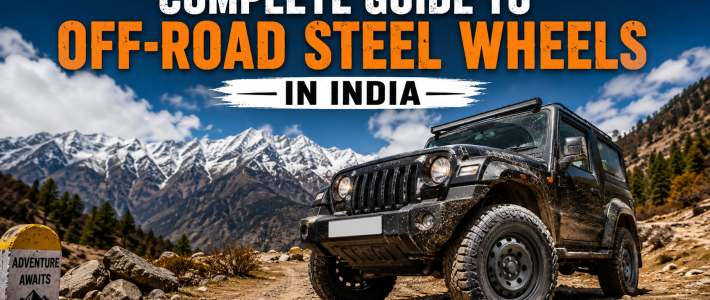

Picture this: you're on a forest track in Coorg, two hours from the nearest tarmac, and the trail gets rocky. Your Thar is doing what it was built to do — climbing, crawling, twisting over terrain that would ground a city car. Then a front wheel catches a boulder edge wrong. If that wheel is a factory-fit alloy, it cracks. The tyre deflates. You're stuck. If it's a quality off-road steel wheel, it bends — and a bent steel wheel can be hammered back into shape on the trail, or at the nearest village garage, and you keep moving.
The stock wheels most 4x4s come fitted with from the factory are sized and specced for a mix of road appearance and cost efficiency — not for repeated contact with rocks, roots, and severe potholes at trail speeds. For owners who use their vehicles off-tarmac regularly, wheel selection is one of the most consequential modifications available, and one of the most under-researched.
This guide covers everything that matters about off-road steel wheels for Indian terrain and Indian 4x4s: what they are, why they perform differently from alloys off-road, how to choose the right size for your vehicle, which SUVs benefit most, and the mistakes that cost buyers money and fitment problems.
What Are Off-Road Steel Wheels?
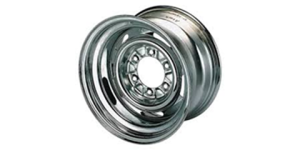
An off-road steel wheel is a vehicle rim manufactured from stamped or pressed steel — specifically engineered for structural strength under the lateral, radial, and impact loads that rocky, rutted, and soft-surface terrain generates. Unlike standard OEM steel wheels fitted to entry-level cars, off-road specific steel wheels use heavier-gauge steel and reinforced bead construction, with wheel widths typically ranging from 8J to 9J (versus a standard road wheel's 6J–7J) to support wider off-road tyres at lower inflation pressures.
The manufacturing specification matters. Swastik Fabs' off-road steel wheels are produced by a certified OEM supplier using high-grade steel to OEM quality assurance standards, with each wheel type meeting the DOT (US Department of Transportation) test standard — the same certification requirement that governs wheels on production vehicles in international markets. This is not a trivial detail: uncertified steel wheels from unknown suppliers can fail structurally under the axle loads that proper off-road use generates.
Key specifications to understand when evaluating steel wheels:
Width (J rating): 8J and 9J are the most common widths for off-road steel wheels. A wider wheel supports larger tyre sections without sidewall stretch, and provides a wider footprint for better grip on loose surfaces.
PCD (Pitch Circle Diameter): The bolt pattern must match the vehicle's hub. Common PCDs in the Indian 4x4 market are 5×139.7 (Mahindra Thar 2020, Maruti Gypsy, Toyota Hilux) and 5×160 (old Maruti Gypsy).
Offset: The distance between the wheel's mounting face and its centreline. Negative offset (-30 to 0mm is common for off-road fitment) pushes the wheel outward for a wider stance and better clearance for oversized tyres.
Centre bore: Must match the vehicle's hub diameter for correct centering. Adaptor rings can compensate for minor mismatches but are not recommended as a long-term solution.
Why Are Steel Wheels Preferred for Off-Roading?
The case for steel wheels on Indian off-road terrain comes down to three properties that no alloy wheel, regardless of price, can replicate: impact resistance, repairability, and cost of damage.
1. Steel Bends — It Does Not Crack
This is the most practically significant difference between steel and alloy wheels for off-road use. When a wheel takes a hard lateral impact — a sharp rock edge, a pothole at speed, a drop off a ledge — the material's response determines what happens next. Steel deforms plastically: it bends. A bent steel wheel holds air, remains drivable at reduced speed, and can often be repaired with basic tools. Aluminium alloy fails brittlely: it cracks. A cracked alloy wheel loses structural integrity, cannot safely hold tyre pressure, and typically must be replaced immediately.
On a trail in Spiti, Ladakh, or the Western Ghats forests, the difference between a bent wheel and a cracked wheel is the difference between getting home and waiting for a recovery vehicle.
2. Impact Resistance on Indian Terrain
Indian roads and trails generate a specific combination of hazards: severe potholes on highway sections, embedded rocks on forest tracks, loose gravel on mountain roads, and rutted mud on monsoon-season trails. The combined radial and lateral loads from these surfaces exceed what standard road driving generates by a significant margin. High-grade steel wheels — particularly those with reinforced bead seats — absorb and distribute these loads through plastic deformation rather than fracturing.
3. Cost Economics
Quality off-road steel wheels in India are priced in the ₹4,000–₹8,000 per wheel range. Equivalent alloy wheels of comparable structural quality (not budget alloys that crack like steel's worst-case scenario) start at ₹10,000–₹25,000 per wheel. The cost differential compounds when damage is considered: a bent steel wheel costs ₹200–₹500 to straighten at a local wheel shop; a cracked alloy costs the full replacement price. For owners running regular off-road routes, steel wheels return their cost premium within one or two avoided damage incidents.
Steel Wheels vs Alloy Wheels: Which Is Better for Off-Road?
For off-road driving in India — rocks, mud, forest tracks, mountain passes — steel wheels win on durability, repairability, and cost. Alloy wheels win on weight, fuel efficiency, and aesthetics. The choice between them should be driven by how and where the vehicle is used, not by which looks better.
Note: Cheap alloy wheels in the ₹4,000–₹7,000 range combine the worst of both worlds — they crack like alloys without providing alloy's weight advantage. If budget requires alloys, quality matters more than it does with steel.
What Size Steel Wheels Should You Choose?
Wheel size selection for off-road use follows a principle opposite to road driving: smaller is generally better. Smaller diameter wheels with taller sidewall tyres absorb trail impacts through the tyre sidewall rather than transmitting them directly to the wheel and suspension. They also maintain more tyre contact with uneven surfaces and allow greater tyre flex at reduced inflation pressures.
Smaller diameter = better off-road (more tyre sidewall to absorb impacts). Larger diameter = better aesthetics + road feel. For dedicated trail use, always go smaller.
Do Steel Wheels Affect Mileage and Performance?
Yes — but the real-world impact is smaller than most buyers fear. The mileage difference between steel and alloy wheels comes from two sources: rotational mass and unsprung weight.
A quality off-road steel wheel (8J × 16") weighs approximately 10–12 kg. An equivalent alloy wheel weighs 7–9 kg. With four wheels fitted, total added rotational mass is 8–16 kg. On highway driving at 80–100 km/h, where the engine works harder to overcome rotational inertia and aerodynamic drag, this typically results in a 0.3–0.7 km/l mileage reduction. At city speeds with frequent stops, the impact is closer to 0.1–0.3 km/l.
For context: the tyres fitted to off-road steel wheels (265/75 R16 mud-terrain, for example) add more rotational mass than the wheels themselves. The tyre choice is typically the larger mileage variable, not the wheel material.
Which SUVs Should Use Steel Wheels in India?
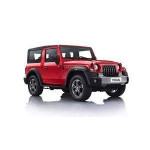
Mahindra Thar 2020
The Thar 2020 is the most common platform for off-road steel wheel upgrades in India. The factory-fit 18" alloy wheels are sized for kerb appeal — they look aggressive on a showroom floor but reduce sidewall height on trail-viable tyres significantly. Moving to 16" steel wheels (5×139.7 PCD, -30 to 0mm offset) gives the Thar 2020 more tyre sidewall for rock protection, reduces the risk of wheel damage on technical terrain, and cuts the cost of any damage that does occur. Swastikfabs stocks multiple steel wheel models specifically designed for Thar 2020 fitment.
Toyota Hilux
The Toyota Hilux entered the Indian market as a genuine heavy-duty utility pickup, and its primary buyers use it on rough terrain — farm tracks, plantation roads, and off-road trips. The Hilux runs a 6×139.7 PCD (six-bolt pattern), which is different from the five-bolt pattern on the Thar 2020 despite sharing the 139.7mm circle diameter. Steel wheels for the Hilux in 16" (6×139.7) offer the same rock-resilience and repairability advantage, with tyre sizing around 265/75 R16 providing meaningful clearance increase over the factory rubber.
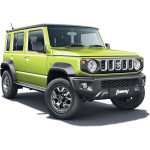
Maruti Jimny (2023+)
The Jimny's short wheelbase and light construction make it one of India's most capable off-road platforms in its size class. Its factory 15" wheel and tyre package is already a sound off-road specification, but the alloy wheels it ships with are vulnerable to the rock edges common on technical mountain trails. Fitting 15" × 7J steel wheels with 215/80 R15 tyres maintains the factory footprint while adding trail resilience. For Jimny owners going to 16", confirm that the additional width does not create body-tyre rubbing on full suspension travel.
Toyota Fortuner
The Fortuner occupies a different usage profile from the Thar or Jimny — most buyers use it as a premium road SUV that occasionally encounters unpaved surfaces rather than as a dedicated trail vehicle. For this usage, 17" steel wheels offer a practical middle ground: significantly cheaper than alloy replacements after damage, more durable on the occasional gravel road or farm track, while not penalising road driving comfort as severely as a 16" setup would. Owners running the Fortuner on technically rough terrain — plantation access roads, river crossings, monsoon-season highland tracks — should consider 16" for increased sidewall protection.
Common Mistakes When Buying Steel Wheels
Mistake 1: Buying the Wrong Size for the Vehicle
The most common error is ordering wheels based on a general size recommendation ("16 inch for Thar") without confirming PCD, offset, and centre bore. A 16" × 8J wheel in 5×139.7 PCD fits the Thar 2020. The same size in 6×139.7 fits the Hilux. These are not interchangeable. Always confirm all four specifications — diameter, width, PCD, and offset — against your vehicle's hub data before purchasing.
Mistake 2: Ignoring Offset
Offset (ET value) determines how far inward or outward the wheel sits relative to the vehicle's suspension. The wrong offset causes tyre rubbing on the wheel arch at full lock or full suspension compression, premature hub bearing wear from altered scrub radius, and in severe cases, altered handling characteristics that are dangerous at road speeds. Off-road fitments typically use negative offset (−30 to 0mm) to widen the track — but the correct value depends on the specific vehicle and whether a body or suspension lift has been fitted.
Mistake 3: Buying Cheap Low-Grade Steel
Not all steel wheels are equivalent. Budget steel wheels in the ₹1,500–₹3,000 range are manufactured from thinner-gauge steel with minimal quality control. Under off-road loads, these deform at much lower impact thresholds than high-grade alternatives — sometimes cracking rather than bending cleanly, eliminating the primary advantage of steel over alloy. The DOT test certification is the minimum credibility marker: Swastikfabs' off-road steel wheels are produced to OEM quality standards and DOT-certified by a certified OEM supplier.
Mistake 4: Mismatching Tyre Type and Size
A steel off-road wheel fitted with road tyres delivers little off-road benefit — the tyre is the primary interface with the terrain. Conversely, fitting a mud-terrain tyre significantly larger than the wheel's width rating stretches the sidewall, reduces load capacity, and creates handling unpredictability on-road. Match tyre width to wheel width: for an 8J wheel, tyre widths of 255–285mm are appropriate. For a 9J wheel, 265–305mm. Always calculate whether the chosen tyre diameter affects speedometer accuracy and whether the tyre clears arches at full compression.
Mistake 5: Skipping Professional Fitment Advice
Wheel and tyre selection for lifted or modified vehicles is more complex than for stock-height 4x4s. A suspension lift changes the effective tyre clearance, alters the steering geometry, and may require a specific offset range to maintain safe scrub radius. Buying wheels online without confirming compatibility with the vehicle's specific modification state — lift height, suspension type, brake clearance — is a common source of expensive fitment errors.
Are Steel Wheels Worth It in India?
For serious off-road use in India — yes, unambiguously. The Indian 4x4 terrain profile (rocky forest tracks in Coorg and Kodagu, mountain trails in Spiti and Ladakh, laterite and mud in coastal Karnataka and Kerala, monsoon-season washed-out roads across the Deccan) generates exactly the conditions where steel's impact resistance and repairability advantage is most relevant.
For daily road drivers who occasionally use gravel or farm tracks: the case is less clear. The mileage penalty and added unsprung weight have a measurable effect on road driving quality that pure off-roaders simply don't notice because they're not paying attention to those metrics. A hybrid approach — steel wheels fitted with all-terrain tyres for owners who split time between road and moderate off-road — works well for this usage.
Why Swastik Fabs for Off-Road Steel Wheels
Swastik Fabs has operated as a specialist 4x4 accessories retailer and importer in Bangalore since 1994. The off-road steel wheels stocked by Swastikfabs are produced by a certified OEM supplier to OEM quality assurance standards — not generic catalogue wheels from unverified sources.
Expert Consultation: Swastikfabs' team works with the customer's specific vehicle, modification state (stock height, lifted, with or without body modifications), and usage profile before recommending a wheel and tyre combination. This pre-purchase technical guidance is what prevents the offset errors and PCD mismatches that are the most common causes of wheel returns and refits.
Correct Fitment Guidance: With fitment data for Thar 2020, Thar (older), Gypsy, Jimny, Hilux, Fortuner, Pajero, Isuzu V-Cross, and other Indian 4x4 platforms, Swastikfabs reduces the risk of ordering incorrectly to near zero.
DOT-Certified Quality: Every off-road steel wheel in the Swastikfabs range meets the DOT test standard — the certification that distinguishes structural wheels from low-grade catalogue alternatives.
Bangalore-Based Inventory: Operating from Jayachamarajendra Industrial Estate, Yelachenahalli, Bengaluru, Swastikfabs carries physical inventory for most fitments — reducing the order-to-delivery time compared to purely online retailers importing to order.
Conclusion
Off-road steel wheels are the practical choice for Indian 4x4 terrain — not because they are the lightest or the most attractive option, but because they are the most durable and the most forgiving when trail conditions go wrong. Steel wheels for off-roading bend rather than crack, cost significantly less than quality alloys, and can be field-repaired in situations where an alloy failure would end the trip. For Thar, Hilux, and Jimny owners who drive trails regularly in India, the upgrade from factory alloys to a quality steel wheel and all-terrain tyre setup is one of the highest-return modifications available.
The critical variables are correct sizing, right offset for the vehicle's setup, and wheel quality that meets at least DOT test standards. Get those three decisions right and a set of steel wheels will outlast multiple alloy sets across the kinds of terrain that make 4x4 ownership worthwhile.
Frequently Asked Questions About Off-Road Steel Wheels
Are steel wheels better for off-roading?
Yes — for rocky, rutted, and technical terrain in India, steel wheels are the better choice. They bend rather than crack under impact, can be repaired in the field or at a local wheel shop, and cost significantly less to replace if damaged. Alloy wheels are lighter and look better on the road, but they crack catastrophically under the same impacts that a steel wheel survives by deforming.
Do steel wheels bend or break?
Quality high-grade steel wheels bend under severe impact — they do not crack or shatter. A bent steel wheel retains air, remains drivable at reduced speed, and can usually be straightened with heat and hammer work at a tyre shop. This plastic deformation behaviour is the primary reason trail drivers prefer steel: a cracked alloy wheel fails completely and cannot be repaired, while a bent steel wheel keeps you mobile.
Which is better: steel or alloy wheels for SUVs?
It depends on use. For primarily road driving with occasional light off-road use, quality alloys offer better fuel efficiency and aesthetics with acceptable durability. For regular off-road use — rocky trails, forest tracks, monsoon roads — steel wheels are the better choice. They absorb impacts through bending rather than cracking, cost less to repair or replace, and require no special care on the types of terrain that damage alloys. Many serious 4x4 owners run steel off-road and keep their alloys for road driving.
What size wheels are best for off-road driving?
Smaller diameter wheels with taller sidewall tyres perform better on technical off-road terrain. For the Thar 2020, 16" steel wheels with 265/75 R16 tyres are a sound off-road choice — the taller sidewall protects the rim from rock contact and provides more tyre flex at reduced pressure. For the Jimny, 15" with 215/80 R15 is the standard choice. For the Hilux, 16" with 265/75 R16. Always balance diameter choice against tyre clearance in the wheel arches at full suspension compression.
Do steel wheels affect fuel efficiency?
Yes, to a small degree. Steel wheels are 2–4 kg heavier per wheel than comparable alloys, adding 8–16 kg of rotational mass per vehicle. This typically results in a 0.3–0.7 km/l fuel economy reduction at highway speeds. For off-road driving, the mileage impact is negligible — off-road driving itself reduces fuel efficiency by 30–50% regardless of wheel material. The steel wheel's durability advantage in terms of avoided damage cost far outweighs the fuel economy difference over any realistic ownership period.
Picture this: you're on a forest track in Coorg, two hours from the nearest tarmac, and the trail gets rocky. Your Thar is doing what it was built to do — climbing, crawling, twisting over terrain that would ground a city car. Then a front wheel catches a boulder edge wrong. If that wheel is a factory-fit alloy, it cracks. The tyre deflates. You're stuck. If it's a quality off-road steel wheel, it bends — and a bent steel wheel can be hammered back into shape on the trail, or at the nearest village garage, and you keep moving.
The stock wheels most 4x4s come fitted with from the factory are sized and specced for a mix of road appearance and cost efficiency — not for repeated contact with rocks, roots, and severe potholes at trail speeds. For owners who use their vehicles off-tarmac regularly, wheel selection is one of the most consequential modifications available, and one of the most under-researched.
This guide covers everything that matters about off-road steel wheels for Indian terrain and Indian 4x4s: what they are, why they perform differently from alloys off-road, how to choose the right size for your vehicle, which SUVs benefit most, and the mistakes that cost buyers money and fitment problems.
What Are Off-Road Steel Wheels?
An off-road steel wheel is a vehicle rim manufactured from stamped or pressed steel — specifically engineered for structural strength under the lateral, radial, and impact loads that rocky, rutted, and soft-surface terrain generates. Unlike standard OEM steel wheels fitted to entry-level cars, off-road specific steel wheels use heavier-gauge steel and reinforced bead construction, with wheel widths typically ranging from 8J to 9J (versus a standard road wheel's 6J–7J) to support wider off-road tyres at lower inflation pressures.
The manufacturing specification matters. Swastik Fabs' off-road steel wheels are produced by a certified OEM supplier using high-grade steel to OEM quality assurance standards, with each wheel type meeting the DOT (US Department of Transportation) test standard — the same certification requirement that governs wheels on production vehicles in international markets. This is not a trivial detail: uncertified steel wheels from unknown suppliers can fail structurally under the axle loads that proper off-road use generates.
Key specifications to understand when evaluating steel wheels:
Width (J rating): 8J and 9J are the most common widths for off-road steel wheels. A wider wheel supports larger tyre sections without sidewall stretch, and provides a wider footprint for better grip on loose surfaces.
PCD (Pitch Circle Diameter): The bolt pattern must match the vehicle's hub. Common PCDs in the Indian 4x4 market are 5×139.7 (Mahindra Thar 2020, Maruti Gypsy, Toyota Hilux) and 5×160 (old Maruti Gypsy).
Offset: The distance between the wheel's mounting face and its centreline. Negative offset (-30 to 0mm is common for off-road fitment) pushes the wheel outward for a wider stance and better clearance for oversized tyres.
Centre bore: Must match the vehicle's hub diameter for correct centering. Adaptor rings can compensate for minor mismatches but are not recommended as a long-term solution.
Why Are Steel Wheels Preferred for Off-Roading?
The case for steel wheels on Indian off-road terrain comes down to three properties that no alloy wheel, regardless of price, can replicate: impact resistance, repairability, and cost of damage.
1. Steel Bends — It Does Not Crack
This is the most practically significant difference between steel and alloy wheels for off-road use. When a wheel takes a hard lateral impact — a sharp rock edge, a pothole at speed, a drop off a ledge — the material's response determines what happens next. Steel deforms plastically: it bends. A bent steel wheel holds air, remains drivable at reduced speed, and can often be repaired with basic tools. Aluminium alloy fails brittlely: it cracks. A cracked alloy wheel loses structural integrity, cannot safely hold tyre pressure, and typically must be replaced immediately.
On a trail in Spiti, Ladakh, or the Western Ghats forests, the difference between a bent wheel and a cracked wheel is the difference between getting home and waiting for a recovery vehicle.
2. Impact Resistance on Indian Terrain
Indian roads and trails generate a specific combination of hazards: severe potholes on highway sections, embedded rocks on forest tracks, loose gravel on mountain roads, and rutted mud on monsoon-season trails. The combined radial and lateral loads from these surfaces exceed what standard road driving generates by a significant margin. High-grade steel wheels — particularly those with reinforced bead seats — absorb and distribute these loads through plastic deformation rather than fracturing.
3. Cost Economics
Quality off-road steel wheels in India are priced in the ₹4,000–₹8,000 per wheel range. Equivalent alloy wheels of comparable structural quality (not budget alloys that crack like steel's worst-case scenario) start at ₹10,000–₹25,000 per wheel. The cost differential compounds when damage is considered: a bent steel wheel costs ₹200–₹500 to straighten at a local wheel shop; a cracked alloy costs the full replacement price. For owners running regular off-road routes, steel wheels return their cost premium within one or two avoided damage incidents.
Steel Wheels vs Alloy Wheels: Which Is Better for Off-Road?
For off-road driving in India — rocks, mud, forest tracks, mountain passes — steel wheels win on durability, repairability, and cost. Alloy wheels win on weight, fuel efficiency, and aesthetics. The choice between them should be driven by how and where the vehicle is used, not by which looks better.
Note: Cheap alloy wheels in the ₹4,000–₹7,000 range combine the worst of both worlds — they crack like alloys without providing alloy's weight advantage. If budget requires alloys, quality matters more than it does with steel.
What Size Steel Wheels Should You Choose?
Wheel size selection for off-road use follows a principle opposite to road driving: smaller is generally better. Smaller diameter wheels with taller sidewall tyres absorb trail impacts through the tyre sidewall rather than transmitting them directly to the wheel and suspension. They also maintain more tyre contact with uneven surfaces and allow greater tyre flex at reduced inflation pressures.
Smaller diameter = better off-road (more tyre sidewall to absorb impacts). Larger diameter = better aesthetics + road feel. For dedicated trail use, always go smaller.
Do Steel Wheels Affect Mileage and Performance?
Yes — but the real-world impact is smaller than most buyers fear. The mileage difference between steel and alloy wheels comes from two sources: rotational mass and unsprung weight.
A quality off-road steel wheel (8J × 16") weighs approximately 10–12 kg. An equivalent alloy wheel weighs 7–9 kg. With four wheels fitted, total added rotational mass is 8–16 kg. On highway driving at 80–100 km/h, where the engine works harder to overcome rotational inertia and aerodynamic drag, this typically results in a 0.3–0.7 km/l mileage reduction. At city speeds with frequent stops, the impact is closer to 0.1–0.3 km/l.
For context: the tyres fitted to off-road steel wheels (265/75 R16 mud-terrain, for example) add more rotational mass than the wheels themselves. The tyre choice is typically the larger mileage variable, not the wheel material.
Which SUVs Should Use Steel Wheels in India?
Mahindra Thar 2020
The Thar 2020 is the most common platform for off-road steel wheel upgrades in India. The factory-fit 18" alloy wheels are sized for kerb appeal — they look aggressive on a showroom floor but reduce sidewall height on trail-viable tyres significantly. Moving to 16" steel wheels (5×139.7 PCD, -30 to 0mm offset) gives the Thar 2020 more tyre sidewall for rock protection, reduces the risk of wheel damage on technical terrain, and cuts the cost of any damage that does occur. Swastikfabs stocks multiple steel wheel models specifically designed for Thar 2020 fitment.
Toyota Hilux
The Toyota Hilux entered the Indian market as a genuine heavy-duty utility pickup, and its primary buyers use it on rough terrain — farm tracks, plantation roads, and off-road trips. The Hilux runs a 6×139.7 PCD (six-bolt pattern), which is different from the five-bolt pattern on the Thar 2020 despite sharing the 139.7mm circle diameter. Steel wheels for the Hilux in 16" (6×139.7) offer the same rock-resilience and repairability advantage, with tyre sizing around 265/75 R16 providing meaningful clearance increase over the factory rubber.
Maruti Jimny (2023+)
The Jimny's short wheelbase and light construction make it one of India's most capable off-road platforms in its size class. Its factory 15" wheel and tyre package is already a sound off-road specification, but the alloy wheels it ships with are vulnerable to the rock edges common on technical mountain trails. Fitting 15" × 7J steel wheels with 215/80 R15 tyres maintains the factory footprint while adding trail resilience. For Jimny owners going to 16", confirm that the additional width does not create body-tyre rubbing on full suspension travel.
Toyota Fortuner
The Fortuner occupies a different usage profile from the Thar or Jimny — most buyers use it as a premium road SUV that occasionally encounters unpaved surfaces rather than as a dedicated trail vehicle. For this usage, 17" steel wheels offer a practical middle ground: significantly cheaper than alloy replacements after damage, more durable on the occasional gravel road or farm track, while not penalising road driving comfort as severely as a 16" setup would. Owners running the Fortuner on technically rough terrain — plantation access roads, river crossings, monsoon-season highland tracks — should consider 16" for increased sidewall protection.
Common Mistakes When Buying Steel Wheels
Mistake 1: Buying the Wrong Size for the Vehicle
The most common error is ordering wheels based on a general size recommendation ("16 inch for Thar") without confirming PCD, offset, and centre bore. A 16" × 8J wheel in 5×139.7 PCD fits the Thar 2020. The same size in 6×139.7 fits the Hilux. These are not interchangeable. Always confirm all four specifications — diameter, width, PCD, and offset — against your vehicle's hub data before purchasing.
Mistake 2: Ignoring Offset
Offset (ET value) determines how far inward or outward the wheel sits relative to the vehicle's suspension. The wrong offset causes tyre rubbing on the wheel arch at full lock or full suspension compression, premature hub bearing wear from altered scrub radius, and in severe cases, altered handling characteristics that are dangerous at road speeds. Off-road fitments typically use negative offset (−30 to 0mm) to widen the track — but the correct value depends on the specific vehicle and whether a body or suspension lift has been fitted.
Mistake 3: Buying Cheap Low-Grade Steel
Not all steel wheels are equivalent. Budget steel wheels in the ₹1,500–₹3,000 range are manufactured from thinner-gauge steel with minimal quality control. Under off-road loads, these deform at much lower impact thresholds than high-grade alternatives — sometimes cracking rather than bending cleanly, eliminating the primary advantage of steel over alloy. The DOT test certification is the minimum credibility marker: Swastikfabs' off-road steel wheels are produced to OEM quality standards and DOT-certified by a certified OEM supplier.
Mistake 4: Mismatching Tyre Type and Size
A steel off-road wheel fitted with road tyres delivers little off-road benefit — the tyre is the primary interface with the terrain. Conversely, fitting a mud-terrain tyre significantly larger than the wheel's width rating stretches the sidewall, reduces load capacity, and creates handling unpredictability on-road. Match tyre width to wheel width: for an 8J wheel, tyre widths of 255–285mm are appropriate. For a 9J wheel, 265–305mm. Always calculate whether the chosen tyre diameter affects speedometer accuracy and whether the tyre clears arches at full compression.
Mistake 5: Skipping Professional Fitment Advice
Wheel and tyre selection for lifted or modified vehicles is more complex than for stock-height 4x4s. A suspension lift changes the effective tyre clearance, alters the steering geometry, and may require a specific offset range to maintain safe scrub radius. Buying wheels online without confirming compatibility with the vehicle's specific modification state — lift height, suspension type, brake clearance — is a common source of expensive fitment errors.
Are Steel Wheels Worth It in India?
For serious off-road use in India — yes, unambiguously. The Indian 4x4 terrain profile (rocky forest tracks in Coorg and Kodagu, mountain trails in Spiti and Ladakh, laterite and mud in coastal Karnataka and Kerala, monsoon-season washed-out roads across the Deccan) generates exactly the conditions where steel's impact resistance and repairability advantage is most relevant.
For daily road drivers who occasionally use gravel or farm tracks: the case is less clear. The mileage penalty and added unsprung weight have a measurable effect on road driving quality that pure off-roaders simply don't notice because they're not paying attention to those metrics. A hybrid approach — steel wheels fitted with all-terrain tyres for owners who split time between road and moderate off-road — works well for this usage.
Why Swastik Fabs for Off-Road Steel Wheels
Swastik Fabs has operated as a specialist 4x4 accessories retailer and importer in Bangalore since 1994. The off-road steel wheels stocked by Swastikfabs are produced by a certified OEM supplier to OEM quality assurance standards — not generic catalogue wheels from unverified sources.
Expert Consultation: Swastikfabs' team works with the customer's specific vehicle, modification state (stock height, lifted, with or without body modifications), and usage profile before recommending a wheel and tyre combination. This pre-purchase technical guidance is what prevents the offset errors and PCD mismatches that are the most common causes of wheel returns and refits.
Correct Fitment Guidance: With fitment data for Thar 2020, Thar (older), Gypsy, Jimny, Hilux, Fortuner, Pajero, Isuzu V-Cross, and other Indian 4x4 platforms, Swastikfabs reduces the risk of ordering incorrectly to near zero.
DOT-Certified Quality: Every off-road steel wheel in the Swastikfabs range meets the DOT test standard — the certification that distinguishes structural wheels from low-grade catalogue alternatives.
Bangalore-Based Inventory: Operating from Jayachamarajendra Industrial Estate, Yelachenahalli, Bengaluru, Swastikfabs carries physical inventory for most fitments — reducing the order-to-delivery time compared to purely online retailers importing to order.
Conclusion
Off-road steel wheels are the practical choice for Indian 4x4 terrain — not because they are the lightest or the most attractive option, but because they are the most durable and the most forgiving when trail conditions go wrong. Steel wheels for off-roading bend rather than crack, cost significantly less than quality alloys, and can be field-repaired in situations where an alloy failure would end the trip. For Thar, Hilux, and Jimny owners who drive trails regularly in India, the upgrade from factory alloys to a quality steel wheel and all-terrain tyre setup is one of the highest-return modifications available.
The critical variables are correct sizing, right offset for the vehicle's setup, and wheel quality that meets at least DOT test standards. Get those three decisions right and a set of steel wheels will outlast multiple alloy sets across the kinds of terrain that make 4x4 ownership worthwhile.
Frequently Asked Questions About Off-Road Steel Wheels
Are steel wheels better for off-roading?
Yes — for rocky, rutted, and technical terrain in India, steel wheels are the better choice. They bend rather than crack under impact, can be repaired in the field or at a local wheel shop, and cost significantly less to replace if damaged. Alloy wheels are lighter and look better on the road, but they crack catastrophically under the same impacts that a steel wheel survives by deforming.
Do steel wheels bend or break?
Quality high-grade steel wheels bend under severe impact — they do not crack or shatter. A bent steel wheel retains air, remains drivable at reduced speed, and can usually be straightened with heat and hammer work at a tyre shop. This plastic deformation behaviour is the primary reason trail drivers prefer steel: a cracked alloy wheel fails completely and cannot be repaired, while a bent steel wheel keeps you mobile.
Which is better: steel or alloy wheels for SUVs?
It depends on use. For primarily road driving with occasional light off-road use, quality alloys offer better fuel efficiency and aesthetics with acceptable durability. For regular off-road use — rocky trails, forest tracks, monsoon roads — steel wheels are the better choice. They absorb impacts through bending rather than cracking, cost less to repair or replace, and require no special care on the types of terrain that damage alloys. Many serious 4x4 owners run steel off-road and keep their alloys for road driving.
What size wheels are best for off-road driving?
Smaller diameter wheels with taller sidewall tyres perform better on technical off-road terrain. For the Thar 2020, 16" steel wheels with 265/75 R16 tyres are a sound off-road choice — the taller sidewall protects the rim from rock contact and provides more tyre flex at reduced pressure. For the Jimny, 15" with 215/80 R15 is the standard choice. For the Hilux, 16" with 265/75 R16. Always balance diameter choice against tyre clearance in the wheel arches at full suspension compression.
Do steel wheels affect fuel efficiency?
Yes, to a small degree. Steel wheels are 2–4 kg heavier per wheel than comparable alloys, adding 8–16 kg of rotational mass per vehicle. This typically results in a 0.3–0.7 km/l fuel economy reduction at highway speeds. For off-road driving, the mileage impact is negligible — off-road driving itself reduces fuel efficiency by 30–50% regardless of wheel material. The steel wheel's durability advantage in terms of avoided damage cost far outweighs the fuel economy difference over any realistic ownership period.
Leave a Comment